
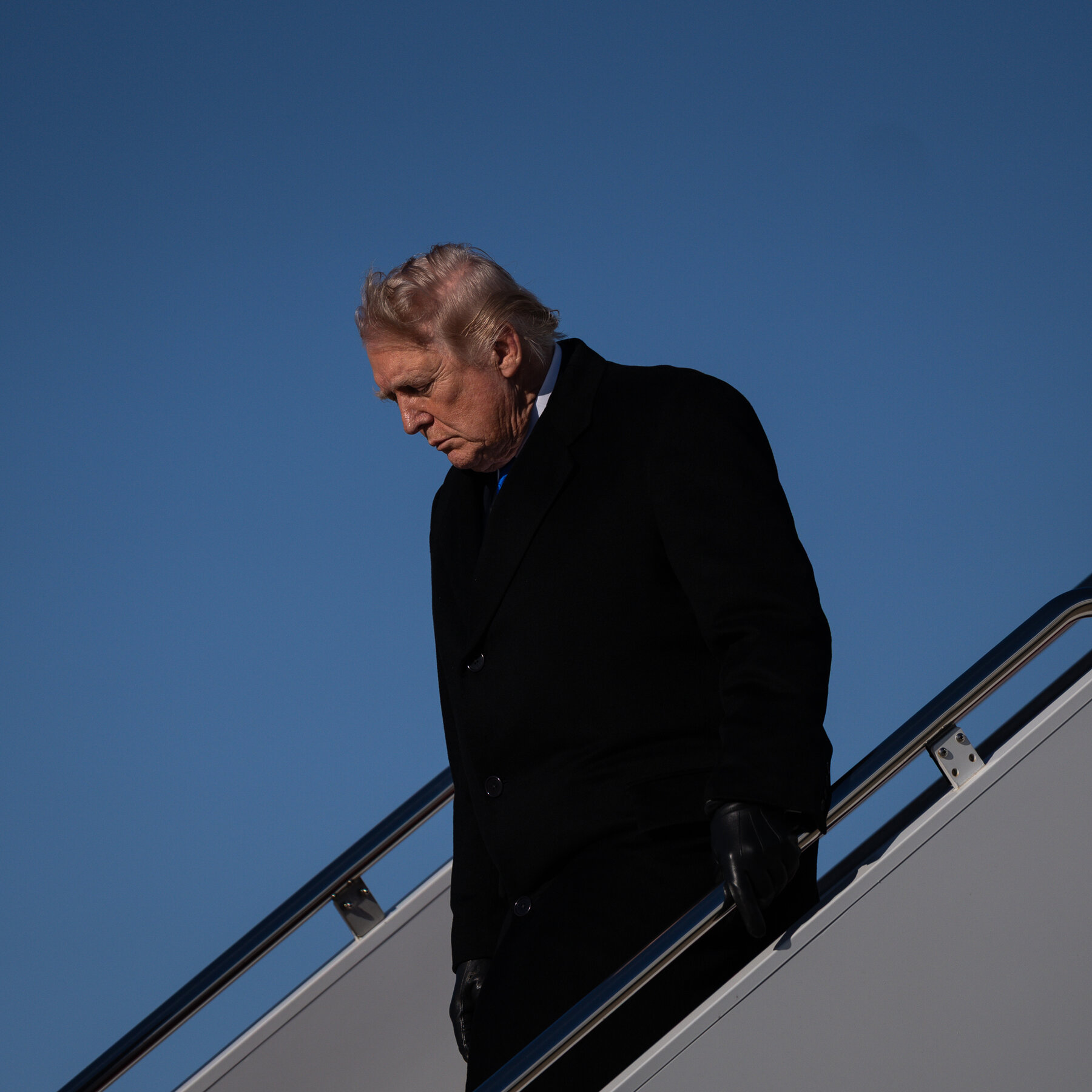
PARIS — U.S. President Donald Trump on Friday called NATO allies “cowards” for their unwillingness to help secure maritime traffic in the Strait of Hormuz, which he said would be a “simple military maneuver” with little risk.
Analysts studying military matters and geopolitics disagree.
While countries including the U.K. and France have said they’re ready to “contribute to appropriate efforts” to ensure safe passage through the Strait, those plans remain in the preparatory stage for now. Western navies operating in the narrow waterway would be well within range of Iranian missiles, cheap drones and even artillery, defense analysts say.
“No, it isn’t easy,” François Heisbourg, a special adviser at the Paris-based Foundation for Strategic Research, said in a response to Trump’s statements posted on Bluesky. “If it were, you presumably wouldn’t be asking us to help you clean up the mess you made.”
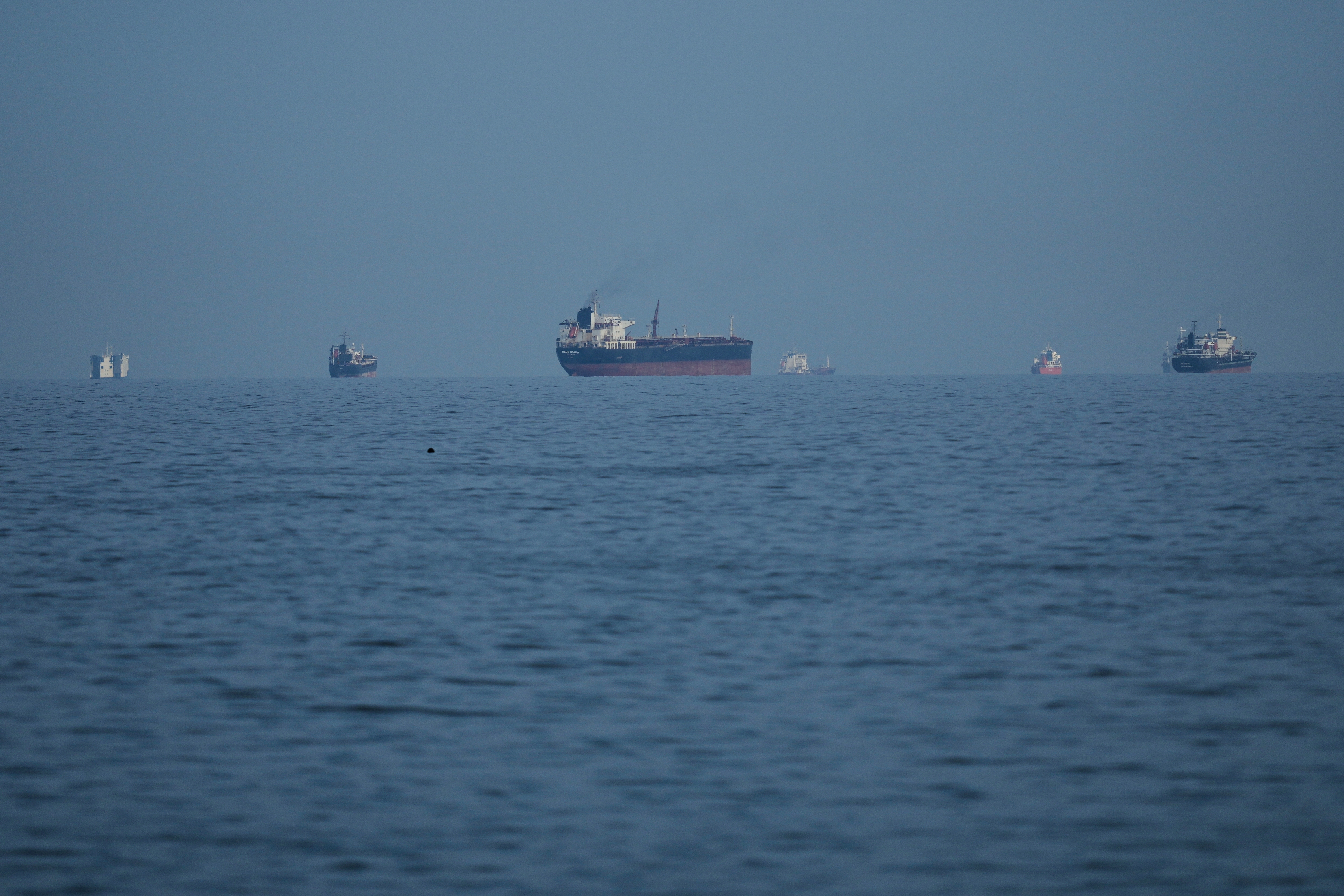
The Strait of Hormuz is a relatively constrained maritime waterway, around 50 kilometers wide at the narrowest stretch, though the water is deep enough for fully laden very large crude carriers, or VLCCs — the industry term of art for the biggest oil tankers — to navigate most of the strait. Iran controls the northern coast of the Persian Gulf and along much of the Gulf of Oman, with the Strait of Hormuz the choke point between the two.
“The Strait of Hormuz reminds us that geography matters,” said Frank Hoffman, a senior fellow at the Foreign Policy Research Institute, in an online commentary. “Iran holds a significant advantage there with the ability to range the narrow international shipping channel with small boats with rockets and guns, and an array of anti-ship cruise missiles.”
Iran had more than 1,000 fast attack craft specifically designed for swarming larger naval vessels, an estimated stockpile of more than 2,000 naval mines, shore-based anti-ship ballistic missiles with ranges of more than 700 kilometers and drone swarms capable of saturating point-defense systems, Roxana Niknami, a professor in European studies at the University of Tehran, wrote in a March 5 analysis for the European Institute for Studies on the Middle East and North Africa.
“Any naval presence will be at considerable risk from Iran’s still-extant ability to launch drones and missiles from any point along the coastline,” said Emma Salisbury, a non-resident senior fellow at the Foreign Policy Research Institute. “Without allied contributions, controlling the Strait will likely be extremely difficult, and those contributions are certainly not forthcoming at the moment.”
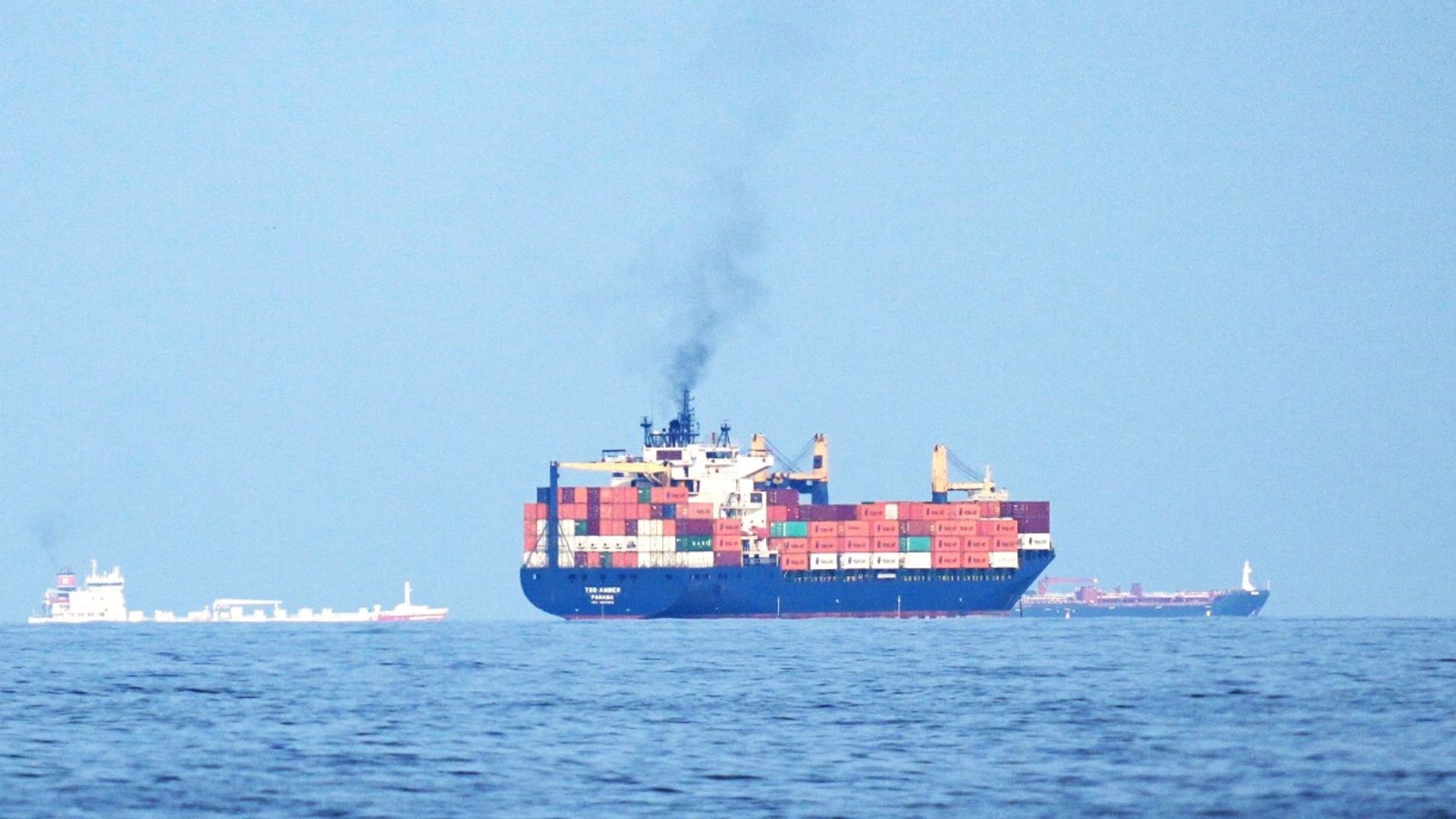
The Strait is a vital passage for world trade, according to UN Trade and Development data, with 38% of the world’s traded crude oil, 29% of liquefied petroleum gas and 13% of traded chemicals passing through the waterway in the week before the U.S. and Israel started striking Iran on Feb. 28.
India, Taiwan and South Korea are highly dependent on Hormuz.

Iran has been targeting commercial vessels in the Strait of Hormuz and the Persian Gulf with missiles and drones, resulting in 17 confirmed incidents between March 1 and March 16, with ships damaged and at least 11 seafarers dead or unaccounted for, according to the International Maritime Organization.
Trump said the Strait of Hormuz will have to be “guarded and policed, as necessary,” by other nations that use it, in a post on his Truth Social account on March 20. The president said the U.S. would help with the effort if asked, though that shouldn’t be necessary once the threat of Iran was removed, saying it would be “an easy military operation for them.”
In another post, he called NATO without the United States a “paper tiger,” unwilling to join the fight against Iran. “Now that the fight is militarily won, with very little danger to them, they complain about the high oil prices they are forced to pay, but don’t want to help open the Strait of Hormuz, a simple military maneuver. So easy for them to do, with so little risk. Cowards, and we will remember.”
Taking questions from reporters on Friday, the U.S. president called reopening the Strait “very simple” and “relatively safe,” but demanding in terms of the volume of ships.
The narrow nature of the Strait would put naval vessels operating there in about the same range as the drone-swarm kill zone in Ukraine, said retired U.K. Air Marshal Martin Sampson, executive director for the Middle East at the International Institute for Strategic Studies, in a webinar on Wednesday.
“Smaller, lower-caliber, one-way drones have not had the opportunity to come into play in this conflict so far,” Sampson said. “But Strait of Hormuz operations may well bring different capabilities to bear. So the nature of the operating environment fundamentally changes.”
Meanwhile, China is watching and learning, and U.S. capabilities in the Strait of Hormuz will be of direct operational relevance to the Indo-Pacific theater, according to Sampson.
“Whatever the U.S. deploys there is likely to compromise some of its advantage that it feels that it’s developing and able to deploy in the Indo-Pacific, a priority region,” Sampson said.
Iran’s capabilities today mean the operational challenge of reopening the Strait of Hormuz today is “categorically more demanding” than in 1988, according to Niknami. Meanwhile, the U.S. without allied support doesn’t have the assets for strike, escort and mine-sweeping at the same time, said Salisbury at the FPRI.
The American operation Earnest Will to protect Kuwaiti-owned tankers from Iranian attacks in 1987 and 1988 was “a different world,” said Nick Childs, IISS senior fellow for naval forces and maritime security, in a webinar with Sampson. He said the U.S. at the time had a fleet of nearly 600 ships, compared to fewer than 300 today, and the Navy already overstretched.
The Strait of Hormuz is a more challenging environment than the Red Sea, with lower warning times, according to Childs. Additionally, even residual Iranian capabilities may be more potent that those of the Houthis in the Red Sea, while facing warships with limited capabilities and with questions around strategic stockpiles of munitions, he said.
The mine threat was underestimated in Operation Earnest Will, and mine countermeasures remain a weakness today, Childs said. While the U.S. has Littoral Combat Ships that can be equipped for mine clearing, those were never meant to be in high-intensity operations, and like any other mine clearing assets, would need protection if combat operations were still underway, according to the researcher.
Allies in the Gulf region have modern ships that could contribute to escort or mine-countermeasure missions, but with “a limited ability, actually, to look after themselves in that such a situation, let alone protect others,” Childs said.
Childs said some estimates suggest Iran has 5,000 to 6,000 mines of different types, and if its mine-laying assets are destroyed, Iran could in a worst case just “roll down mines off the back of a dhow.” He said that just the threat of mines could make shippers reluctant to send their vessels through the Strait.
“Mines have two warheads,” Childs said. “One is a high-explosive warhead, and the other one is a psychological one. Just the threat and thought of the possibility that there might be a mining threat may be enough to maintain that stranglehold.”
Rudy Ruitenberg is a Europe correspondent for Defense News. He started his career at Bloomberg News and has experience reporting on technology, commodity markets and politics.




-3.png)