
On Nov. 8, 1942, the United States opened a new front against Germany, Italy and Vichy France when its forces landed in Morocco and Algeria. At the same time, the British First and Eighth armies advanced against the receding Axis forces from the east. On March 10, 1943, an ailing Field Marshal Erwin Rommel was evacuated to Germany, leaving Afrika Korps under the command of Generaloberst Hans-Jürgen von Arnim. Although the Axis was now cornered in Tunisia, its forces were still holding their remaining ground with the tenacity of a cornered badger.
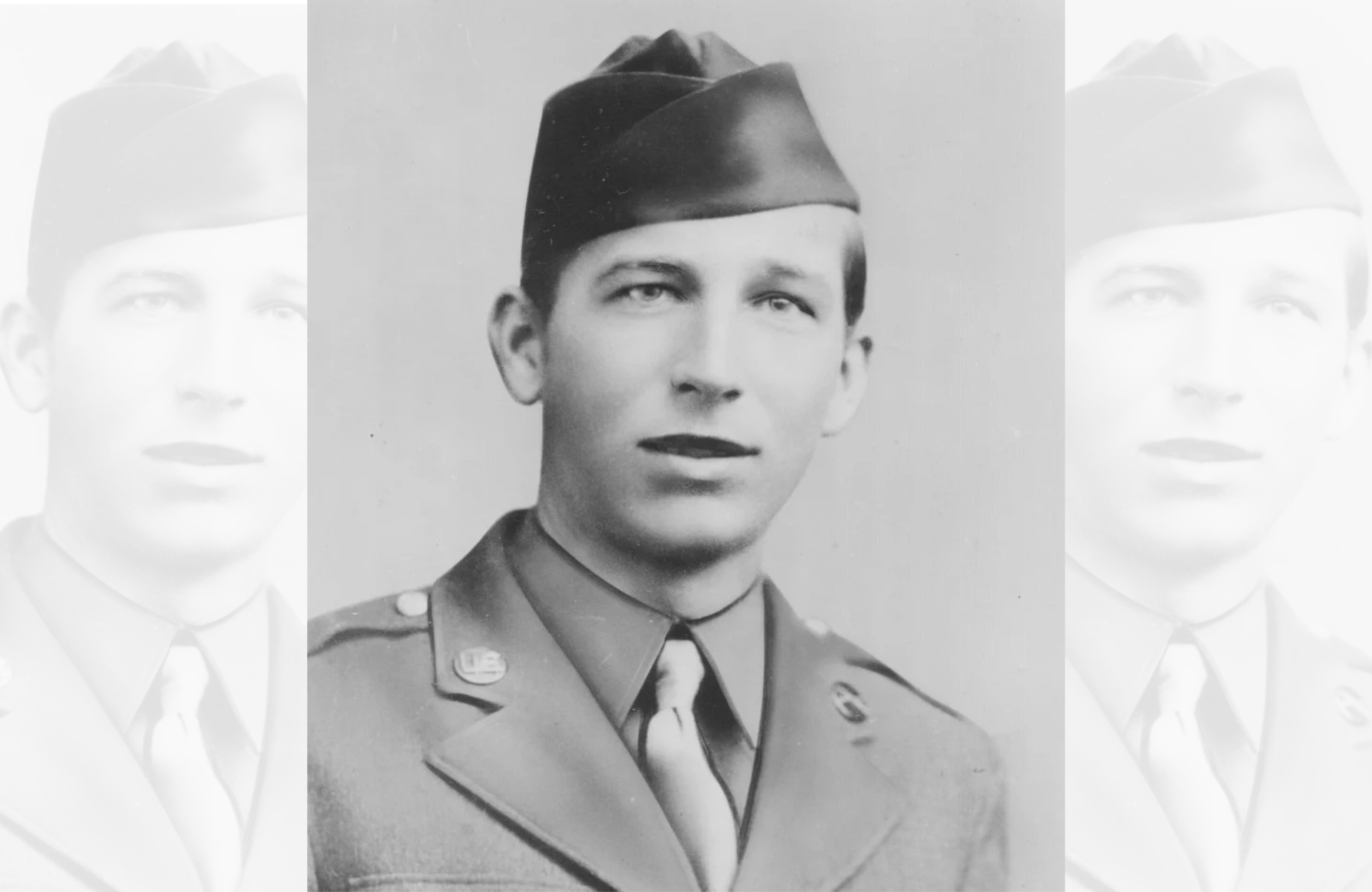
After suffering a humiliating defeat at Rommel’s hands at Kasserine Pass in Feb. 19-23, 1943, however, from March 23 to April 3 the Americans demonstrated their ability to learn under the tutelage of Lt. Gen. George S. Patton Jr. at El Guettar. Among those quick learners were Pvt. Robert Booker.
Born in Callaway, Nebraska, on July 11, 1920, Booker joined the Army in June 1942 and after training he was assigned to B Company, 133rd Regiment, 34th Infantry Division. Arriving in Belfast on Jan. 26, 1942, the 34th was the first American division to reach UK soil and on Nov. 8, it landed at Algiers alongside elements of the British 78th Infantry Division and two British Commando units. From there, the division took part in a succession of battles: Kasserine Pass, Sened Station, Sidi Bou Zid, El Guettar, Faid Pass, Sbeitla and Fondouk.
It was at Fondouk that Booker had his moment of challenge. On April 9, 1943, he was carrying the machine gun and ammunition for his company across an open field when they came under heavy enemy mortar and machine gun fire. As Booker’s citation noted, “He continued to advance despite the fact that two enemy machine guns and several mortars were using him as an individual target.”
Although enemy artillery also began to register on him, the wounded gunner reached his intended location 600 feet ahead, immediately set up his weapon, commenced firing and eliminated one enemy machine gun position.
Booker then turned his weapon on a second enemy machine gun, but the enemy was focusing its attention on him and struck him a second time. Although mortally wounded, Booker “remained retrained and unfazed as he continued to encourage his squad and helped direct their fire.”
Slain at age 22, on April 25, 1944, Robert Booker was awarded the Medal of Honor on April 25, 1944, but followed it with an unusual epilogue.
Decades after his sacrifice, the Army commemorated him as the namesake of a new “armored infantry support vehicle,” the M10 Booker. Developed by General Dynamics Land Systems and unveiled in June 2023, the “assault gun” was a relatively lightly armored vehicle with a 105mm M35 cannon, a 12.7mm M2HB machine gun and a 7.62mm M240 weapon for use against light armor and defensive positions.
The M10, however, suffered from weight problems and shifting priorities in the Army budget, leading to its cancellation in 2025. By then, 80 had been produced and plans for their disposal, such as sale to another country, currently remains undetermined.



-3.png)