
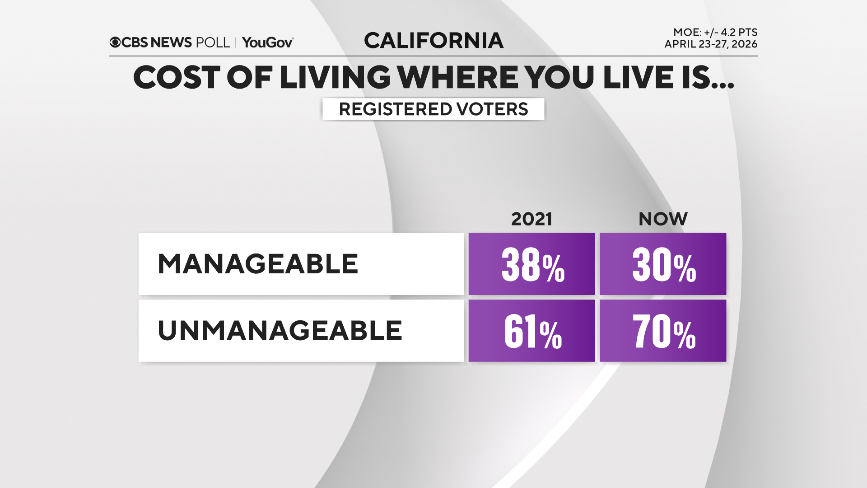
The California governor's primary — and Tuesday's debate — take place against a backdrop of voters calling the cost of living in the state unmanageable, with many feeling the famous "California Dream" is out of reach.
So, what would primary voters want done about that right now?
Democrats, who tend to see the state's economy as better than other voters do, are looking for at least some similarity with Gov. Gavin Newsom's policies and overwhelmingly want a candidate who'd oppose President Trump. Republicans, however, paint a much bleaker picture of the state.
All that means it's still a wide-open contest with a lot of candidates in the mix, including a heavily fractured Democratic field, as the percentage of undecided voters outweighs any single candidate's support. And candidates are often being considered by more people than those who are currently voting for them.
Describing a choice
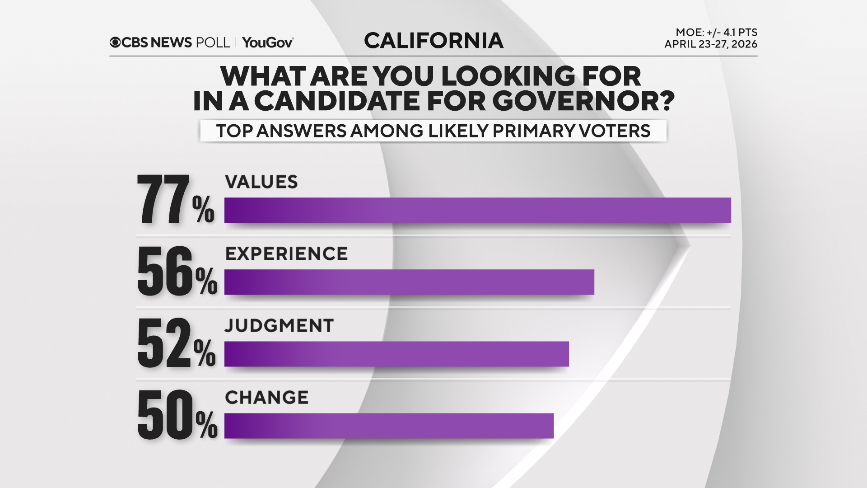
The descriptors "values" and "judgment" stand out as desirable qualities in a candidate. Democrats also want "experience" — perhaps partly reflecting that they are the incumbent party.
More Republicans want a candidate they associate with "change."
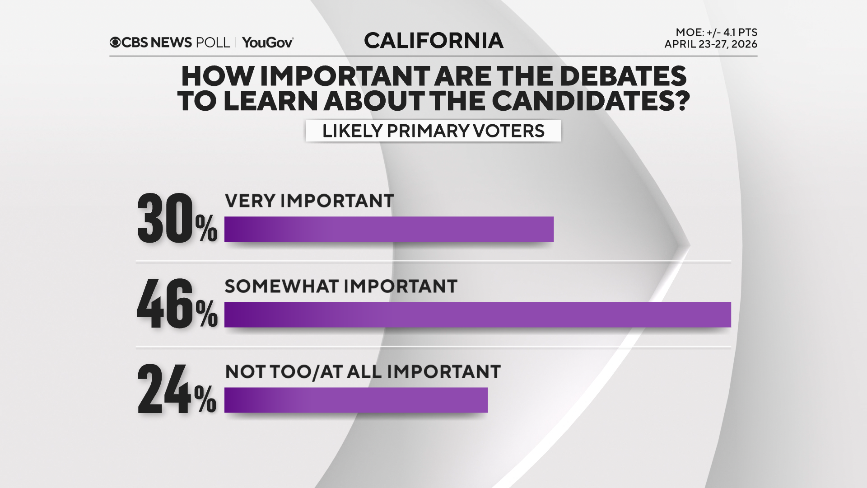
With most voters saying debates matter at least somewhat, it all suggests a dramatic final month before the primary.
Cost of living
More Californians call the cost of living in California "unmanageable" than did five years ago, partly reflecting the inflationary pressures over the ensuing years after COVID.
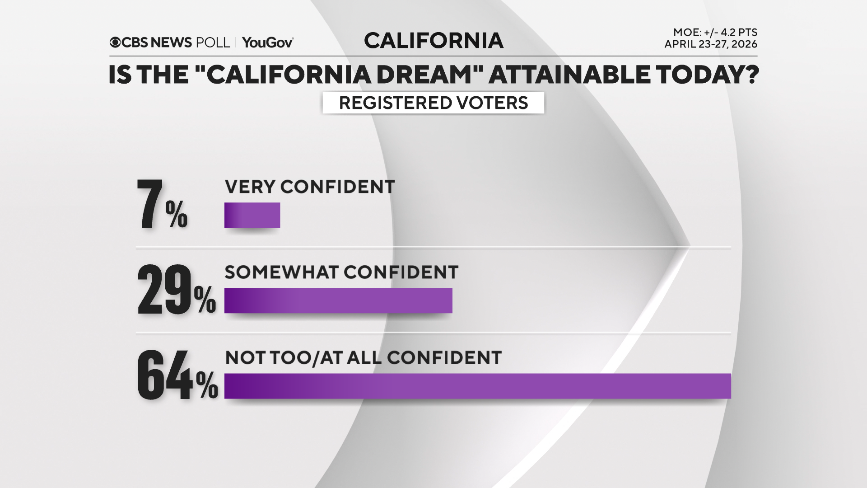
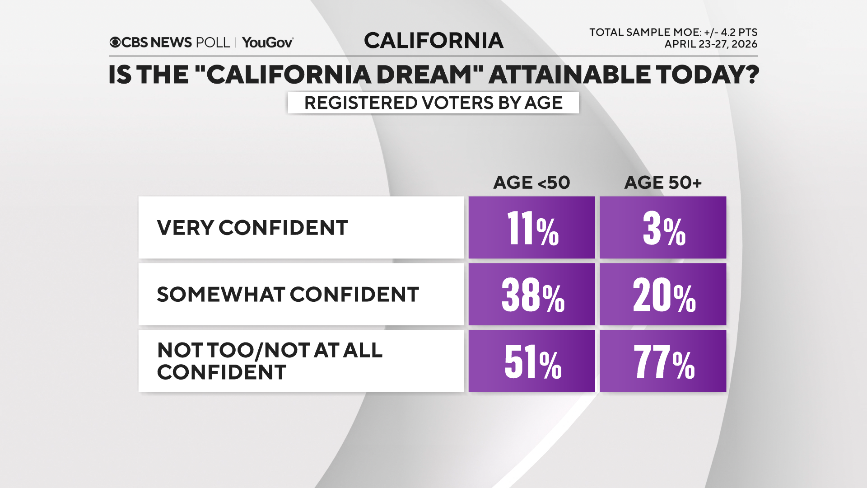
More broadly, and perhaps more long term, there is a lack of confidence that the California Dream is attainable.
That said, younger people remain relatively more optimistic, and there's more confidence among those under 50 than among older Californians, and among Democrats more so than Republicans.
The economy overall
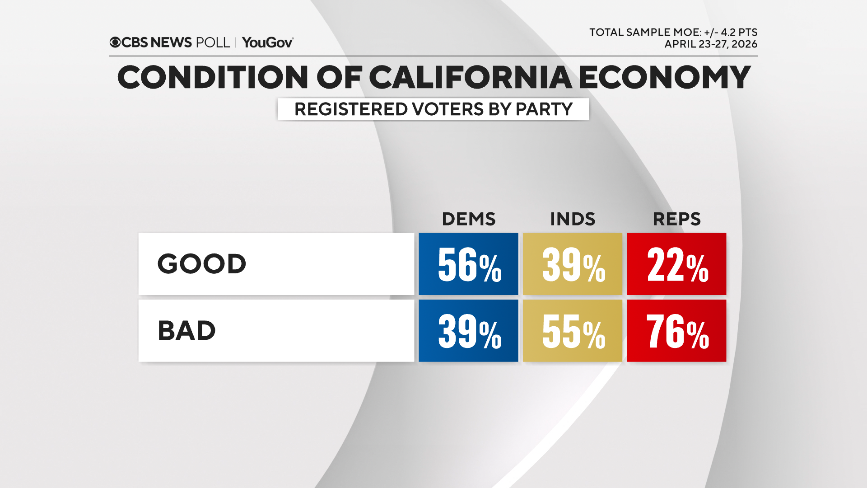
Beyond the personal, partisans have slightly different takes on what's happening to the state's economy. That, in turn, shapes what they want from a governor.
Democrats tend to have a better impression of how things are going in California, compared to other voters overall.
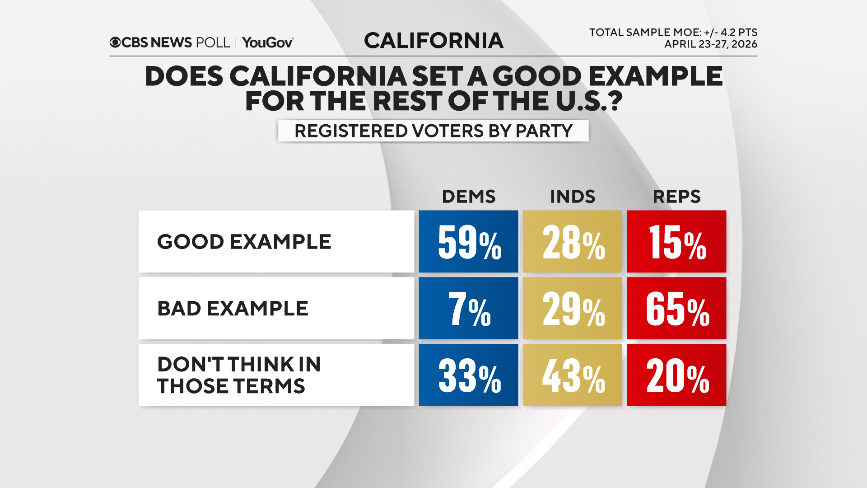
Democrats also tend to say California more generally sets a good example for the rest of the nation. Republicans think it sets a bad one.
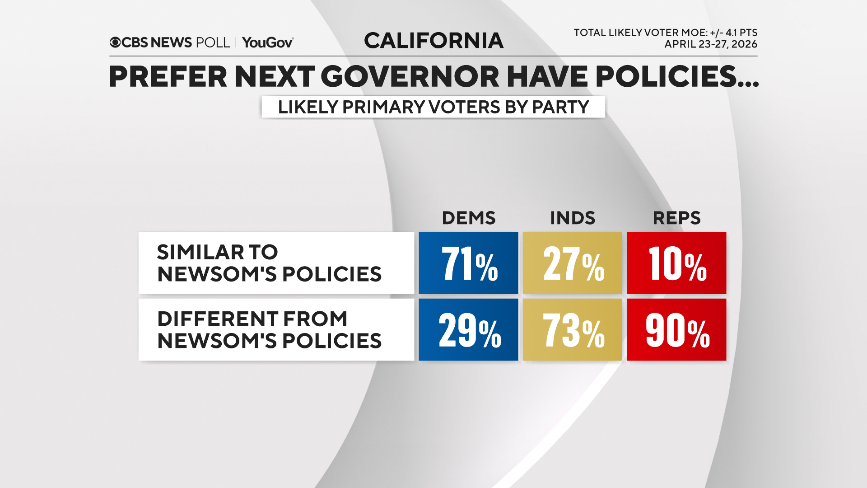
So, Democratic primary voters want a candidate with policies at least somewhat, if not very, similar to Newsom's.
Within the Democratic ranks, those who want a candidate with very similar policies to Newsom are a little more for former HHS Secretary Xavier Becerra, while Democrats who want someone with different policies are a bit more for philanthropist Tom Steyer.
Republicans, for their part, paint a much more dire picture of the state. They see a state where things aren't going well, where the economy is not just bad, but is worse than the nation's.
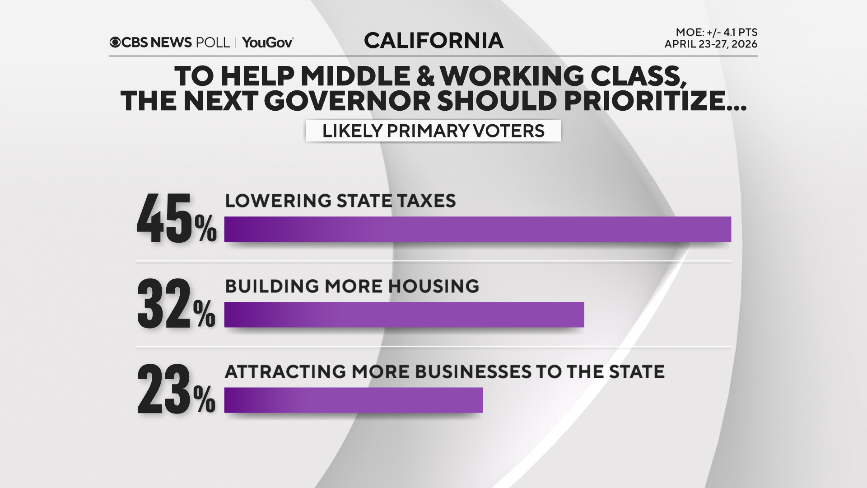
And there is a difference of opinion on what the next governor should prioritize in their approach to helping the middle and working class.
Democrats want the next governor to prioritize a mix that includes building more housing, whereas Republicans largely identify the top priority as lowering taxes.
Gas prices
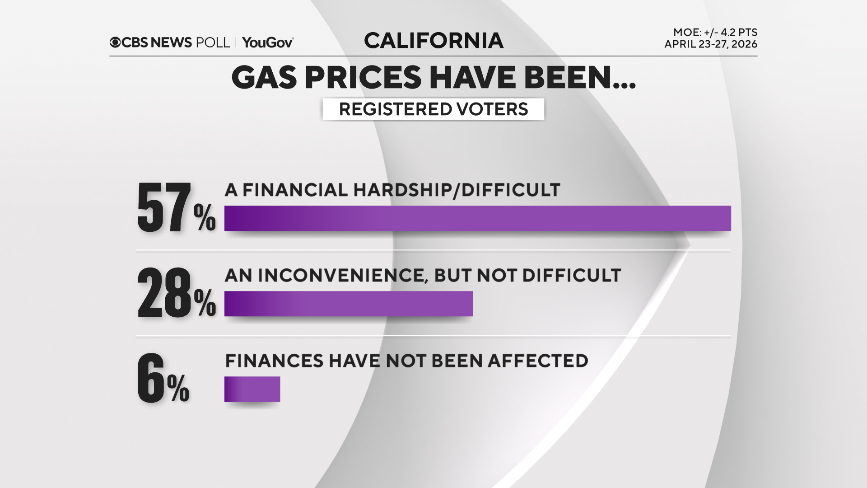
Gas prices in particular have hit hard. (This is not unique to California, as our polling nationally has also shown.)
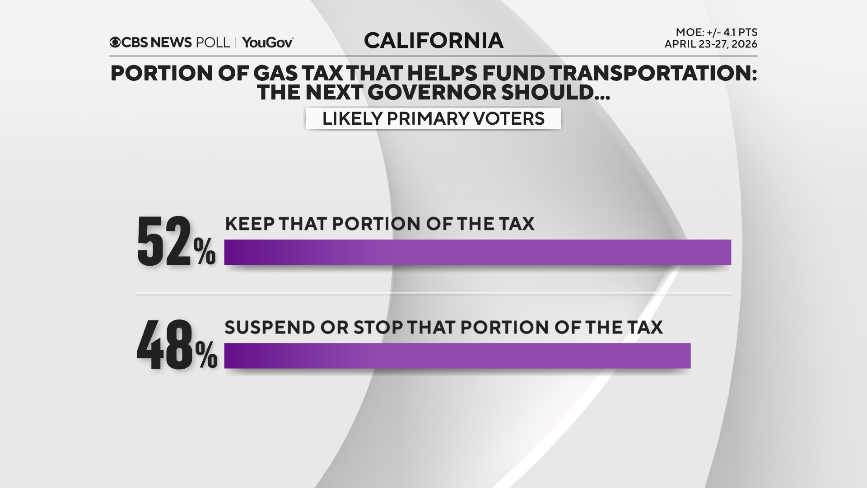
As one potential policy to address gas prices in California, voters are mixed on whether they want the next governor to suspend part of the state's gas tax, with slightly more saying not to do so.
The issues of the economy and jobs and inflation are at or near the top for both parties. Immigration and crime are higher in importance for Republicans, and climate change and healthcare are higher for Democrats.
Nationally, Americans have perceived a connection between the rise in gas prices and the conflict in Iran.
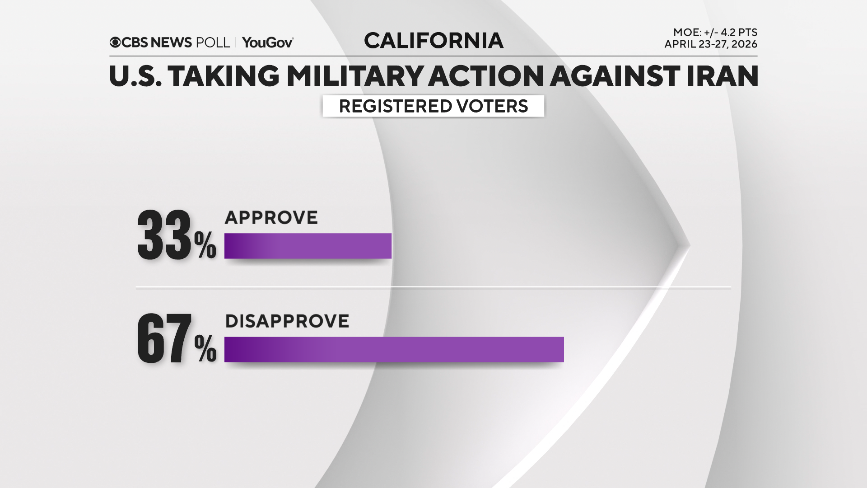
Large majorities of California voters are opposed to the U.S. military action in Iran and say a candidate's position on it is important to their vote.
The Trump factor
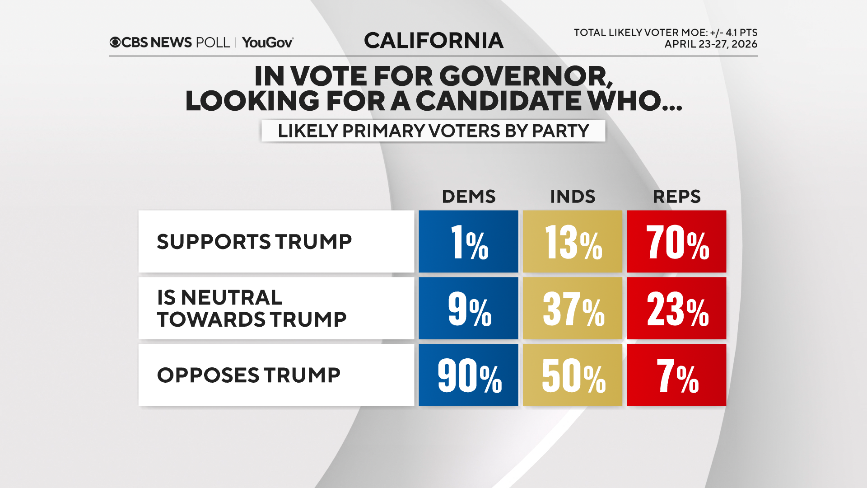
Democrats overwhelmingly want a candidate who always opposes Mr. Trump, and in particular would not cooperate with the administration on ICE operations.
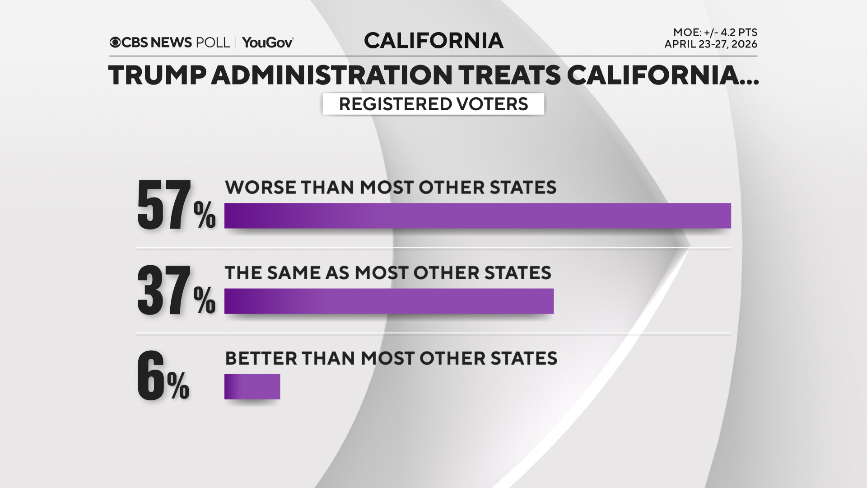
This is partly because they — like the majority of voters overall — believe the Trump administration treats California worse than other states.
Republicans want a candidate who usually, if not always, supports Mr. Trump.
Vote choice
On vote choice, it remains a fractured field and a very open contest overall to secure the top two positions that advance to the November general election. No single two candidates have pulled away, and the two highest — Republican Steve Hilton and Democrat Tom Steyer — are in the mid-teens, with most of the others separated from each other by single digits. In fact, there are more "undecided" voters than any single candidate has support, underscoring the potential volatility of the race.
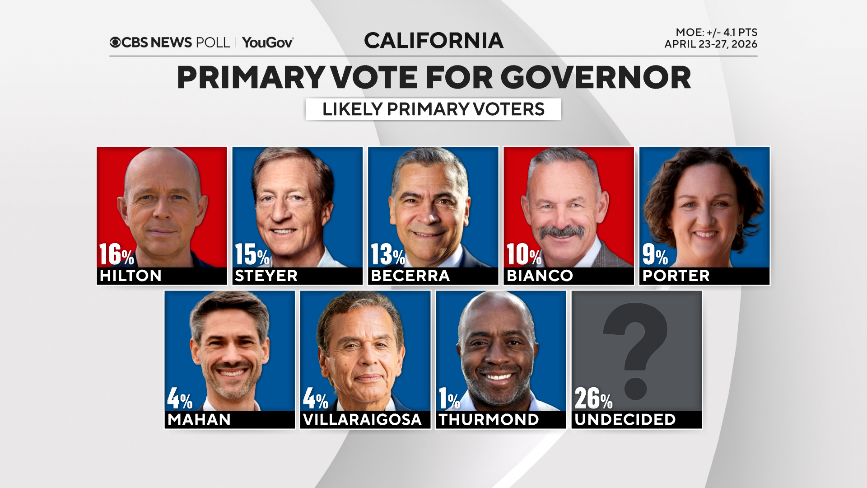
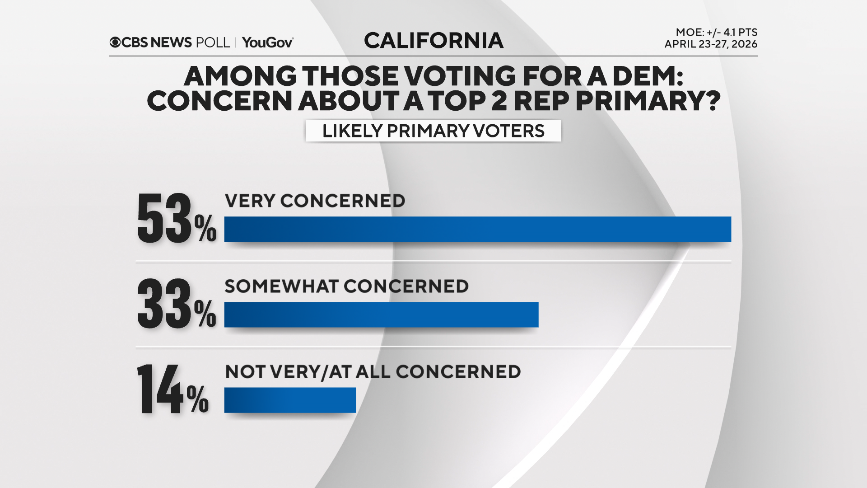
The state's Democratic voters greatly outnumber its Republican voters. However, with many Democratic candidates running and splitting up all those Democratic votes, there is concern among Democrats that the two Republican candidates could then finish on top. That would leave the Democrats shut out of the general election.
That said, individual Democrats haven't yet consolidated behind any one or two candidates en masse.
We also asked which candidates voters might consider — even if they're not backing them now — and voters could pick as many or as few as they liked.
The chart below shows the percentage who would consider supporting each candidate, perhaps reflecting their ceiling at the moment, if they can translate that consideration into support down the road.
Also, for many voters, there are a lot of candidates about whom they have not heard enough.
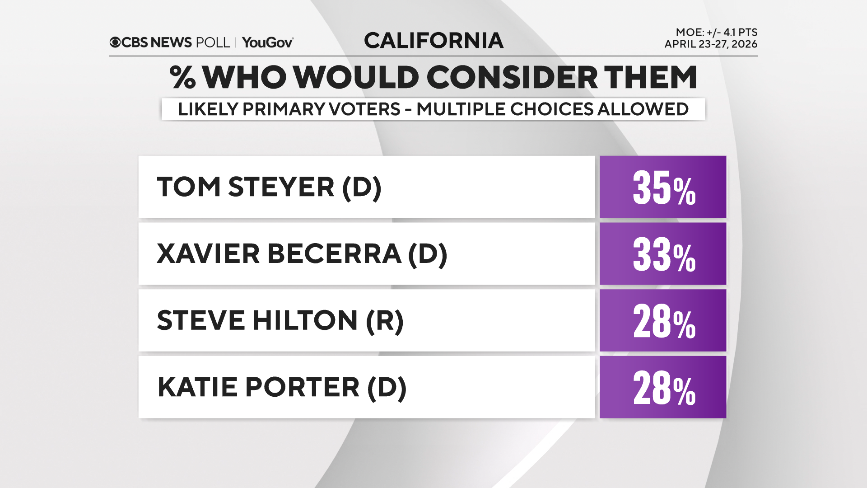
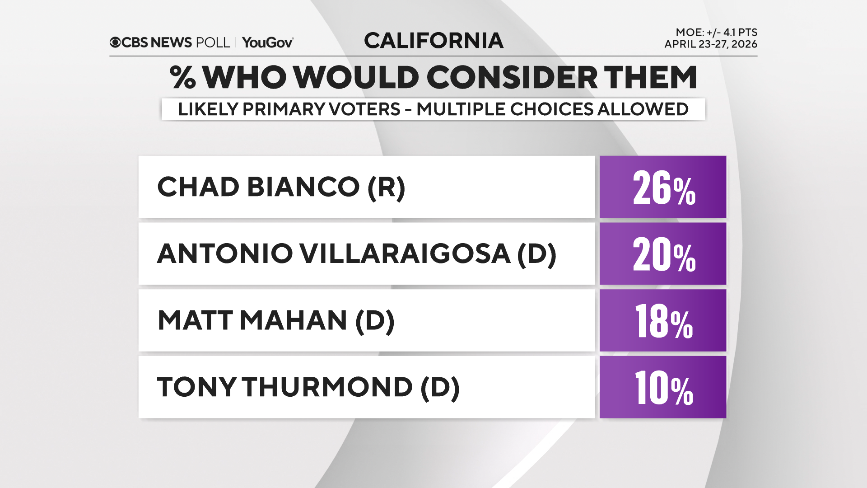
Democratic voters say they would consider multiple candidates right now, but almost exclusively Democratic candidates. For instance, very few of those considering Becerra and Steyer are also considering Republicans Hilton or Bianco. Similarly, very few who are considering GOP candidates are also considering Democratic ones.
That large number of undecided voters could be partially because a sizable portion of primary voters are not satisfied with the current choice of candidates. It's independents who most wish there were more choices. But those unsatisfied are also less likely to say they will vote, so it may be that the electorate shifts as well if they don't show up.
This CBS News/YouGov survey was conducted with a representative sample of 1,479 registered voters in California interviewed between April 23-27, 2026. The sample was weighted according to gender, age, race, education, and geographic region based on the voter file and U.S. Census data, as well as to 2024 presidential vote. The margin of error is ± 4.2 points for registered voters and ± 4.1 points for likely primary voters.





-3.png)