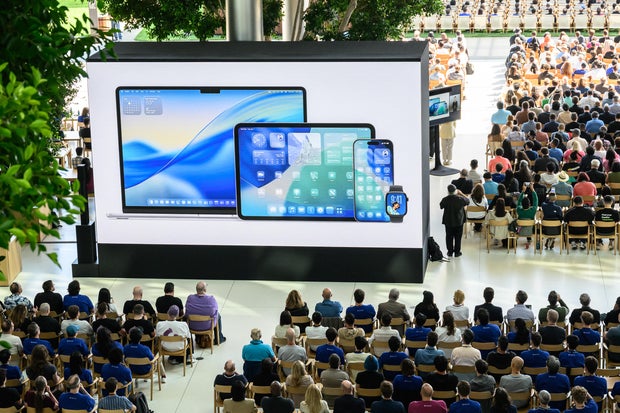

Highguard's launch this week would've probably passed by largely unremarked if it wasn't for its appearance at last year's The Game Awards. Unusually for a game with no prior hype or obvious pedigree, it featured as the show's big "and finally" reveal, immediately subjecting it to intense, and slightly bewildered, scrutiny. After that, even as hard facts on the game remained scarce, it continued to draw scorn, purely for the sin - or so it seemed - of being yet another live-service game. There's plenty more to say on Highguard specifically now it's out, but its arrival this week got us talking about the live service curse - the intense skepticism and innate ill-will that seems to accompany every announcement of a new contender, even before they've had a chance to prove themselves. So this week's Big Question for us and then you - are we being too hard on live-service games?
It's tough not to be skeptical, of course. Taken as a monolithic block, live service games have engendered ample reasonable distrust over the years as they've adopted increasingly manipulative, exploitative tactics to sustain themselves - from loot boxes and battle pass grinds to limited-time FOMO. But there're also those that have found a more benevolent formula for survival, garnering praise for their more player-friendly approach, even if it had to be earned.
"It's easy to decry live service games as awful - a waste of time and money and development resources - when you focus in on just the rancid stuff," reckons Eurogamer's Connor Makar, "but that'd be ignoring the player-minded games out there; the ones that understand that with great time investment must come great respect for that time: your Warframes, your Helldivers 2s, your Old School RuneScapes; the finer few that float above the rest. Take a step back and there's clearly a good way to approach live service development, away from the trend-chasing, absurd monetisation, limited-time FOMO slop."
But, of course, it's hard to confidently hold any live service game up as the one that got it right when history is littered with examples of good 'uns slowly succumbing to enshitification. Look at something like Sea of Thieves; it's far from the most egregious example, but after launching its paid store in 2019, the shift away from its starting point of limiting paid ship cosmetics to Rare-themed designs hasn't gone unnoticed. These days, its Pirate Emporium is awash with outfits, emotes, pets, trophies, trinkets, and £20+ ship sets of all stripes, while its non-time-limited free cosmetic additions are increasingly rare - and the game's news updates often feel more like ads for the paid store. And that's without getting into the time-hoovering seasonal battle pass grind introduced in 2021, or the increasing reliance on limited-time FOMO. It seems to suggest: even with the best intentions, when a system can be exploited - by corporate beancounters or otherwise - it probably will.
And Eurogamer's Dom Peppiat has a similar tale. "I was a hardcore Destiny 2 player, and didn't mind paying the (quite expensive) 'top ups' for content multiple times a year," they explain. "It was based on an old MMO-style way of thinking: pump in money, get a chunk of content per time. Fine. Good. I pretty much knew what to expect and what my money would get me. Since Bungie made the game free-to-play, though, the seasonal system of updates became more vague, and more prone to last-minute changes - suddenly, there was no expectation of value to updates or seasons, and gradually all the coolest cosmetics began to disappear behind a separate, currency-based paywall that you couldn't really earn in-game."
As Dom notes, there's an inherent Faustian Pact at the heart of any live service proposition: "either you pay to keep things going, or you eat the ads in order to have the developers keep their lights on." But Eurogamer's Chris Tapsell suggests there's something else going on here too: a perhaps unreasonable tendency to blindly dismiss any and all live service games as an exercise in corporate artlessness, when the situation is rarely quite so black and white. "The logic goes - and I should emphasise, very understandably in many cases - that a game is a live service because some clueless executive somewhere has decided it must be so," he explains. "And then the poor developers, void of free will, churn out some miserable; generic; FPS; hobby-grade coop campaign; genre-blended, multi-mode competitive e-sports; meta-growth, choice + epic Battleborn Heroes! (to borrow a phrase)."
"It's reasonable because this has genuinely happened lots of times," Chris continues. "See: Warner Bros. with Sledgehammer and EA with BioWare, for just a couple obvious examples. And because we, in the press, have emphasised this very silly executive reasoning as a key part of the catastrophic decline the games industry has had over the past few years - because it is! Along with a lot of other things, anyway. The narrative, which has some accuracy to it, goes that developers' creativity is being stifled for the sake of trend-chasing ventures (read: live service games) doomed from the outset."
Which does, of course, bring us back to Highguard; a game that has, as Chris puts it, been "utterly bludgeoned with YouTube video after YouTube video, mob Steam review after mob Steam review" because it's seen as 'another Concord'. "And because, at the risk of a tangent here," he continues, "YouTube revenue and viewership has become so strained in recent times that outrage 'content' is increasingly the only reliable source of income - and in a quiet January, that makes a fairly clunky, vaguely progressive-looking live service game like Highguard an easy target." But the thing about Highguard is that it's not, as Chris points out, a "years-long publisher folly but an independent venture, made by people who made games like Apex Legends, who are making it because they're passionate about competitive online shooters with weird and interesting strategic elements and, erm, incomprehensible art styles."

"To put it plainly," he concludes, "there are many, many things wrong with many, many live service games, but there are other live service games that exist for exactly the reason we want any game to exist: because some talented, creative, desperately determined people wanted to make it. Not all (or even many) of those games will be good - but the odd one lands, and in those cases the effect of playing online with old friends, or new friends, or random, brilliant encounters, is about as good as any video game's can be."
But of course, as long as the Fortnites, Warzones, and GTA Onlines of this world keep bringing in the big bucks, there'll always be those approaching live service games not as a form of artistic expression but purely for their money printing potential - and the cynical manipulations, the dark patterns and predatory monetisation, the destructively stupid executive decision-making, will continue. As Connor puts it, "Anyone who pretends this culture of negativity around live service games has emerged out of nowhere has had their head in the sand", and that means developers should probably accept their cool new live service game is riding in on a tide of well-earned cynicism. But does that mean we shouldn't at least give them the benefit of the doubt before damning them to the grave? Well, that's The Big Question, isn't it? Over to you!






-3.png)