

President Donald Trump’s stated reasons for why he wants the United States to take possession of Greenland have varied over the past year, but one is increasingly gaining traction in political discourse: The U.S. needs to acquire Greenland to protect itself against missile attacks.
It does not, and forcing the issue actually weakens U.S. national security.
Much of this is tied to the proposed Golden Dome missile defense system, though specific details of the program have yet to fully emerge. House and Senate appropriators noted in the fiscal defense appropriations bill that “due to insufficient budgetary information, the House and Senate Defense Appropriations Subcommittees were unable to effectively assess resources available to specific program elements and to conduct oversight of planned programs and projects for fiscal year 2026 Golden Dome efforts in consideration of the final agreement,” even given that they “support the operational objectives of Golden Dome for national security.”
Additionally, Greenland is repeatedly mentioned in the Trump administration’s recent National Defense Strategy as a place where the U.S. needs guaranteed military access.
RELATED
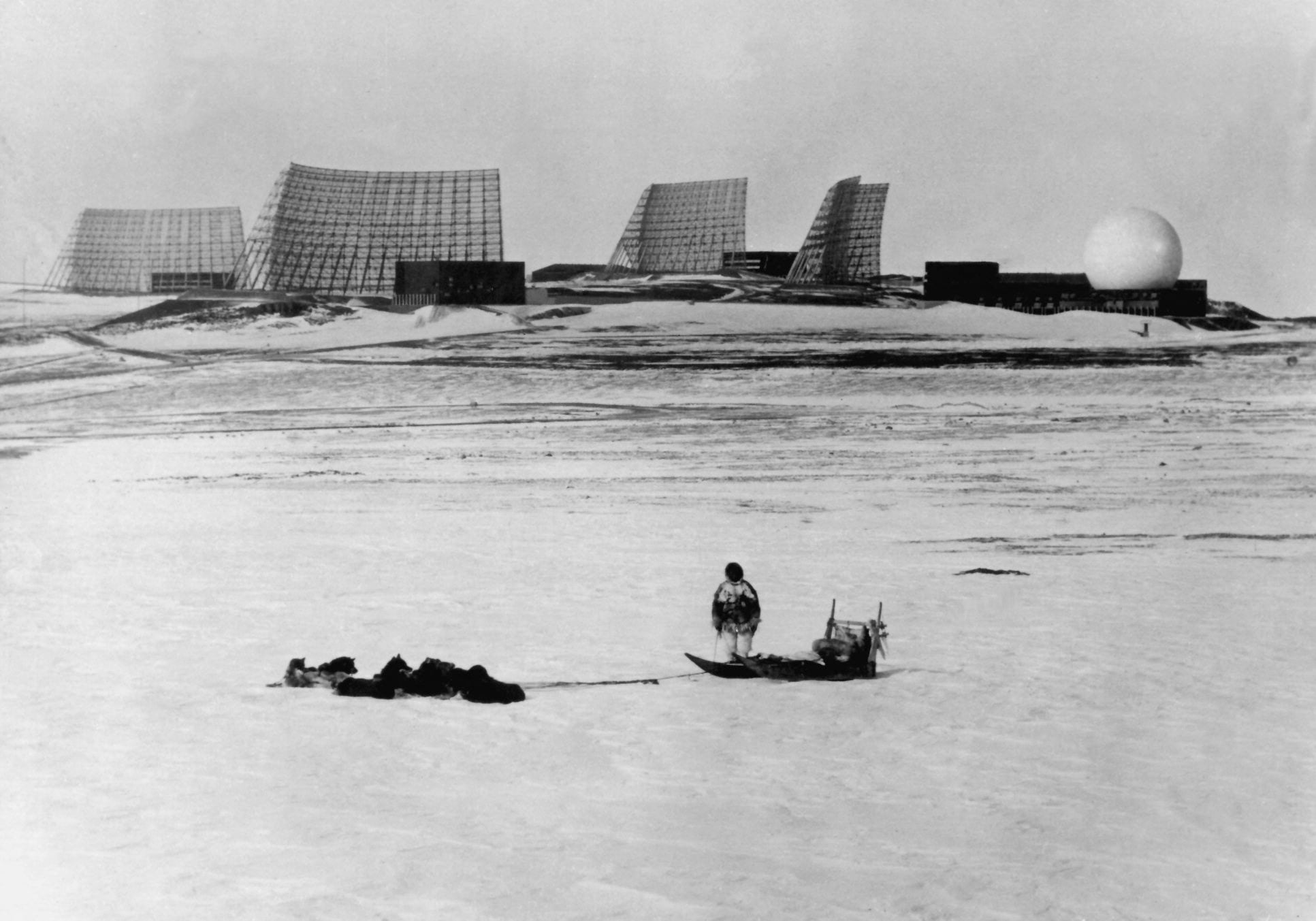
But based on the originating executive order released by the White House in January 2025 and the few related unclassified discussions, Golden Dome is intended to be a multilayered system that would protect the United States from all types of threats: ballistic missiles, cruise missiles, hypersonic weapons and even drones. It would be a system of systems that would incorporate many of the existing missile defense architecture’s elements, including the Ground-based Midcourse Defense (GMD) system, intended to defend against ICBMs. It is reported to entail four interceptor layers — three land based, one space based — plus 11 short-range missile defense batteries scattered across the U.S. And it would use various sensors, including one that has been part of the U.S. early-warning network for decades: the ground-based radar at the Space Force’s Pituffik Space Base in Greenland.
But let’s say that the U.S. decides it must expand the U.S. military footprint in Greenland in order to meet (as yet undefined) Golden Dome architecture plans. The terms of the 1951 agreement between the U.S. and Denmark are very flexible. It says that the U.S. has the right “to improve and generally to fit the area for military use” and “to construct, install, maintain, and operate facilities and equipment,” as well as having “the right of free access to and movement between the defense areas through Greenland” and “the right to exercise exclusive jurisdiction over those defense areas in Greenland.”
Precedence exists about how the U.S. and Denmark have dealt with changing missile defense priorities. When the George W. Bush administration wanted to upgrade its radar there, a request to the Danish parliament was unanimously approved in 2004. However, none of the reporting about Golden Dome indicates that new ground-based sensors would be created as part of it, with the focus instead on building space-based sensor networks.
What about placing interceptors in Greenland? Again, under the current military agreement, the U.S. could already do this. But even so, Greenland is not needed as a new interceptor site. The U.S. has 44 GMD interceptors fielded in Alaska and California, and the Missile Defense Agency has received funding to create a third basing site for GMD interceptors at Fort Drum, New York.
This accommodates any need for a more northern position without the requirement to have a site outside the United States. Plus, the number of fielded GMD interceptors has been 44 for over 20 years; these are expensive to build, operate and maintain, and MDA has been focused more on working on upgrades (and struggling to do so) than building out the supply. So it’s not like there is a waiting warehouse full of GMD interceptors. And the GMD system is the only system intended to defend against ICBMs.
Further, forcibly annexing Greenland does nothing to bolster U.S. national security — rather the opposite.
By menacing a NATO ally, the U.S. weakens a military alliance that has served us well for over seven decades. Space Force officials have repeatedly said that one of our strongest assets are our international partners and allies. This move kneecaps strategies put in place by the Space Force to utilize them, including its International Partnership Strategy released in July 2025. Chief of Space Operations Gen. Chance Saltzman said at the time, “Spacepower is the ultimate team sport. … Therefore, if the service is to achieve its mission to secure our nation’s interests in, from, and to space, then it absolutely must cultivate partnerships with partners upon whom it can depend on.”
Golden Dome is problematic for many reasons, including its astronomical cost, technical complexity and contribution to the weaponization of space. Don’t let it be used to justify the annexation of a NATO ally’s territory as well.
Victoria Samson is chief director of space security and stability for the Secure World Foundation where Krystal Azelton is senior director of program planning.





-3.png)