
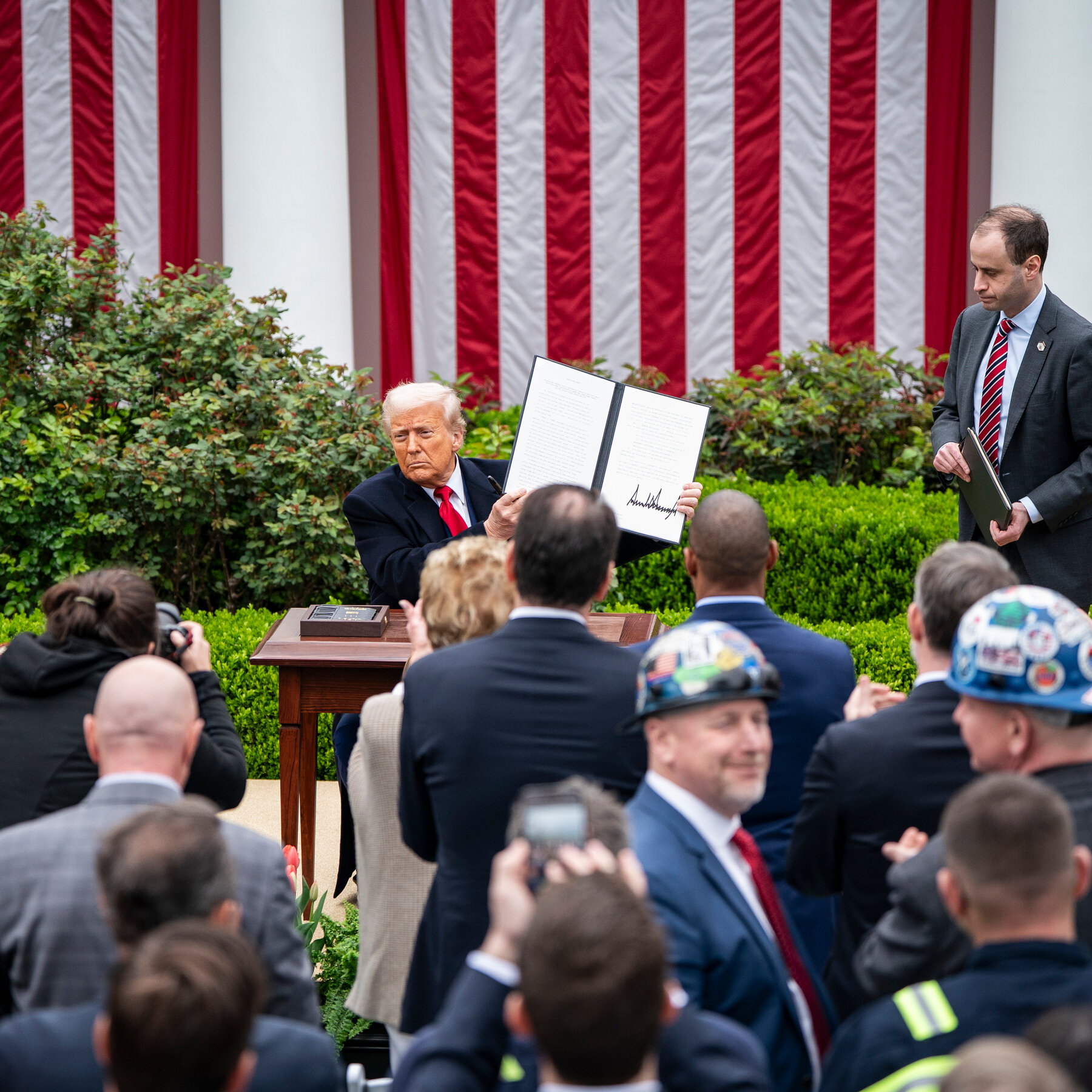
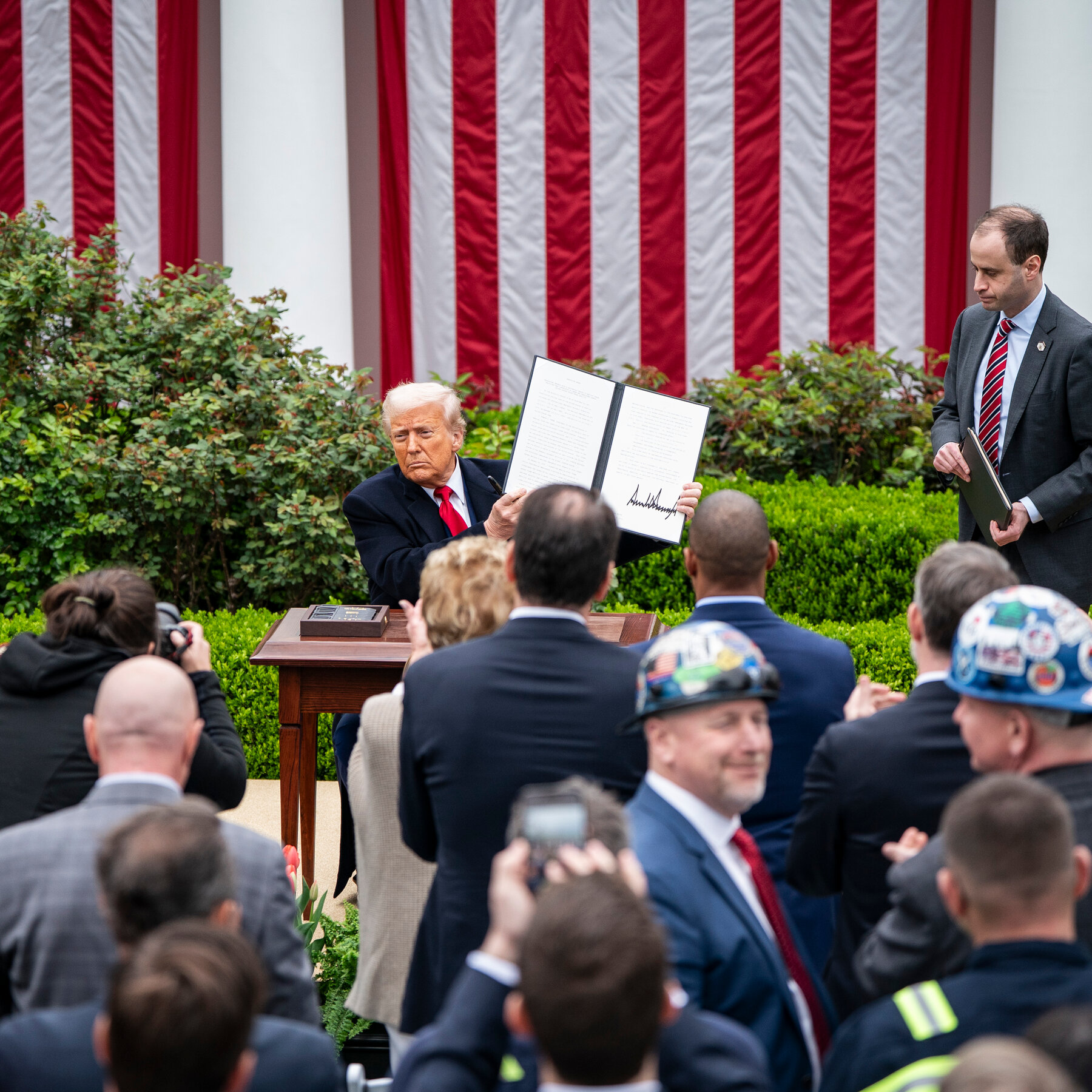
President Trump signed a proclamation Friday night that will impose 10% tariffs on most foreign imports to the United States, just hours after the Supreme Court struck down a set of sweeping global tariffs that were issued under a different legal authority.
The new tariffs take effect early Tuesday morning and will be in place for 150 days. Some foreign goods are exempted from the 10% duties, including certain food imports, critical minerals, electronics and cars. Goods from Canada and Mexico that are covered by a trade deal negotiated in Mr. Trump's first term also aren't subject to tariffs.
"It is my Great Honor to have just signed, from the Oval Office, a Global 10% Tariff on all Countries, which will be effective almost immediately," the president wrote in a Truth Social post.
The move comes as Mr. Trump scrambles to resurrect the worldwide regime of steep tariffs and trade deals that form a core part of his economic agenda. Most of his tariffs hinged on a law called the International Emergency Economic Powers Act, or IEEPA, which the Supreme Court ruled Friday cannot be used to impose tariffs.
Friday's tariffs were issued under a different law: Section 122 of the Trade Act of 1974. That legal provision lets the president impose duties of up to 15% for 150 days to deal with "large and serious" balance-of-payment issues.
The new levies mirror the 10% baseline tariff rate Mr. Trump rolled out on goods from dozens of U.S. trading partners starting last spring. He argues that blanket tariffs are necessary to address trade deficits and revive American manufacturing, but many economists warn that the costs of tariffs are largely borne by consumers.
But many trading partners faced higher rates under Mr. Trump's previous tariff regime, including a set of "reciprocal" tariffs on a litany of countries, and levies on many goods from China, Canada and Mexico that were linked to drug trafficking concerns. Some countries negotiated down those rates as part of broader trade deals. All of those measures, however, relied on the Trump administration's interpretation of IEEPA, which was struck down by the high court on Friday.
The nonpartisan Tax Foundation estimated in November that if Mr. Trump tried to replace his IEEPA tariffs with 10% Section 122 tariffs, it would bring in just over half of the revenue generated by IEEPA. And the actual revenue could be lower if importers decide to wait out the 150-day time limit.
It's not clear whether the administration will try to reinstate any of the higher country-by-country tariff rates. Asked whether his trade deals will remain in place, Mr. Trump told reporters Friday: "Some of them stand. Many of them stand. Some of them won't, and they'll be replaced with the other tariffs."
The Supreme Court's ruling did not impact tariffs that were issued under legal authorities aside from IEEPA, including Mr. Trump's tariffs on steel, aluminum and auto imports.
Mr. Trump also directed U.S. Trade Representative Jamieson Greer's office to open investigations into "certain unreasonable and discriminatory acts, policies, and practices that burden or restrict U.S. commerce" under Section 301 of the Trade Act, the White House said. That law allows the government to impose tariffs and other measures to correct unfair trade practices.
Greer said in a statement late Friday he expects the Section 301 probes "to cover most major trading partners." He said they will be conducted on an "accelerated timeline" and could result in tariffs.


-3.png)